We Build Solar Where it Makes Sense
We develop solar on land and water — including reservoirs, capped landfills, closed mines, and industrial property. Every project is designed around the site’s existing use, environmental constraints, and long-term value. Some sites are best suited for floating solar, some for ground-mount solar, and some for both. Determining what fits is where we start.
01.

YOU HAVE:
A man-made waterbody that already has a job.
Quarries, wastewater lagoons, cooling and tailings ponds, raw & process water, stormwater basins, and other man-made reservoirs.
Algae & Water Quality
Evaporation & Drought
Underutilized Surface
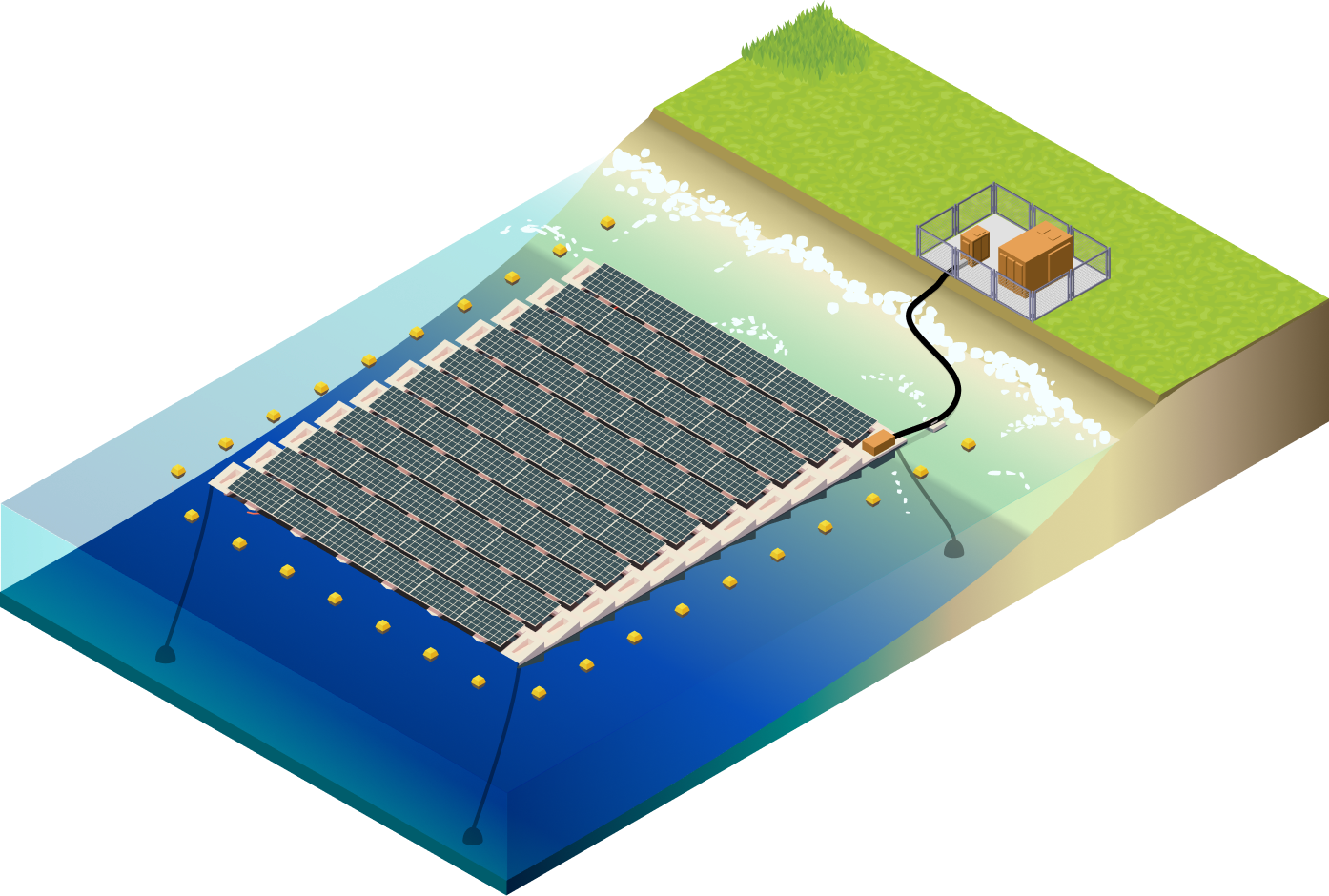
Shading can help manage algae and water temperature. Sites already paying for chemical treatment or mechanical circulation tend to notice the difference first.
Shade and wind protection reduce water lost to evaporation. How much you keep depends on your climate and how much surface the array covers, so we model it for your site rather than quoting an average.
The array generates power without consuming additional acreage. Land you might need later for expansion, storage, laydown, or anything else stays exactly as available as it is today.
YOU HAVE:
Land with no competing future.
Remediated land, closed mines & landfills, retired power plant sites, utility & tranportation buffer, and other industrial, disturbed or brownfield land.
Closure & Monitoring Costs
Property
Sitting Idle
No Development Options
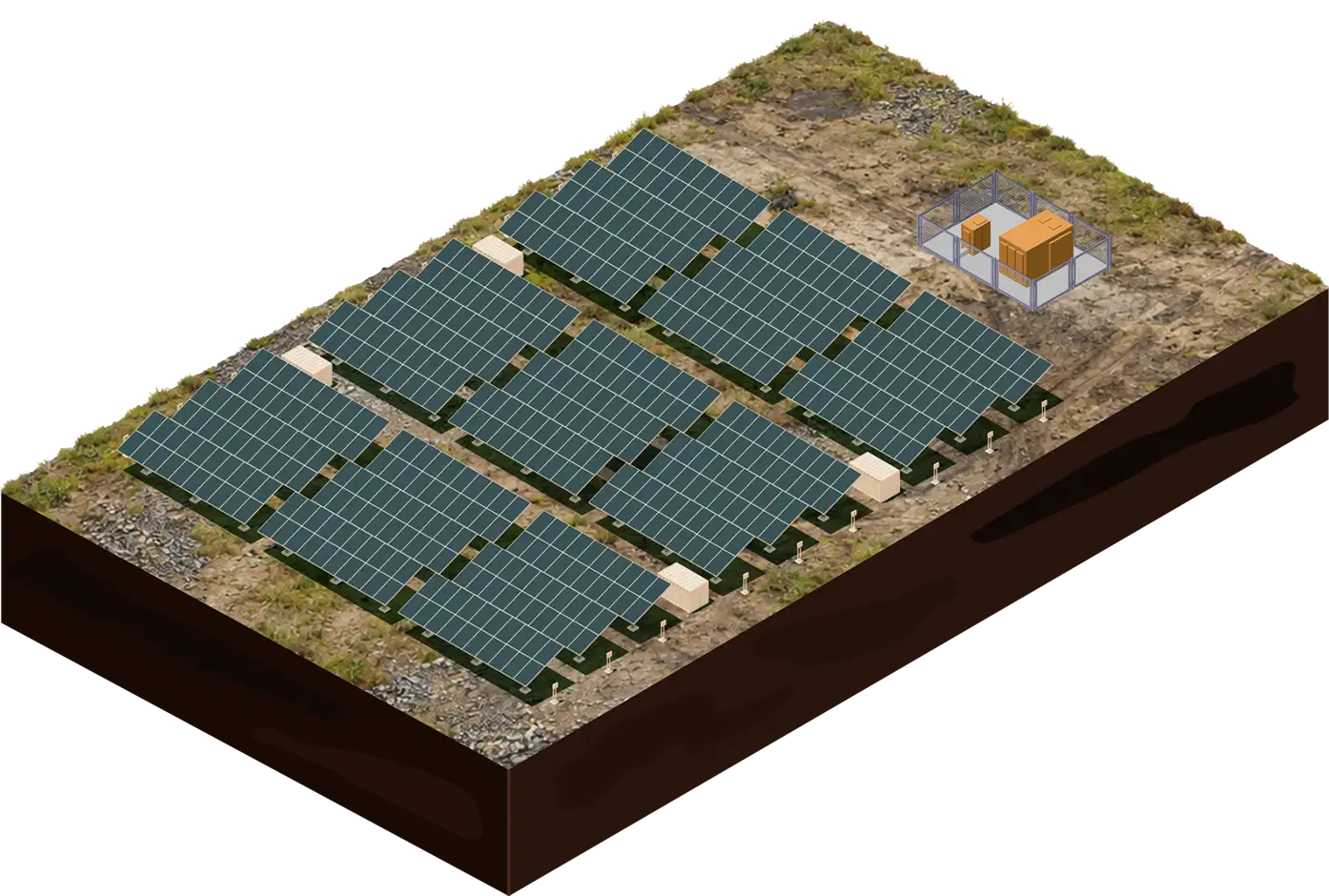
The site keeps its current designation — and generates revenue that can help cover monitoring, maintenance, or other long-term obligations.
A capped or closed site costs money while generating nothing. An array turns constrained land into a productive asset without interfering with the property itself.
Putting an array on ground that has no other use can preserve land needed for operations, agriculture, or future development.
02.
Floating and ground-mounted systems are engineered differently, but what they mean for a site owner is the same. We develop, finance, own, and operate the project. You continue using the site as intended and receive lease revenue, reduced operating expenses, or both — without the capital investment or operating responsibility.
Receive predictable, long-term payments for hosting the project on your property.
Solar creates value beyond revenue — including lower-cost electricity or reduced evaporation
We finance the project, allowing your capital to stay focused on your core business.
We own, monitor, maintain, and manage the project for the full term of the agreement.
03.
We plan around the site’s existing use, access, operating requirements, and constraints before the design is finalized. The goal is a project that works with what is already there, not against it.
We preserve the access, inspection routes, and equipment corridors owners and operators need to use the site.
Design accounts for the realities of the property - from water-level changes and monitoring points to closure requirements and existing infrastructure.
We plan construction around operating schedules, seasonal constraints, shutdowns, and other site requirements to minimize disruption.
The Third Pillar Lifecycle
We take a full-lifecycle approach — developing, owning, operating, and maintaining our projects for the long term, then responsibly decommissioning them and restoring the site at the end of their useful life.
The Third Pillar Ecosystem
The right solution depends on the site, the grid, and the objective. We evaluate the opportunity, then develop, finance, build, and operate the project including solar, storage and infrastructure as stand-alone or integrated solutions.
Solar
Battery Storage→
Infrastructure→